
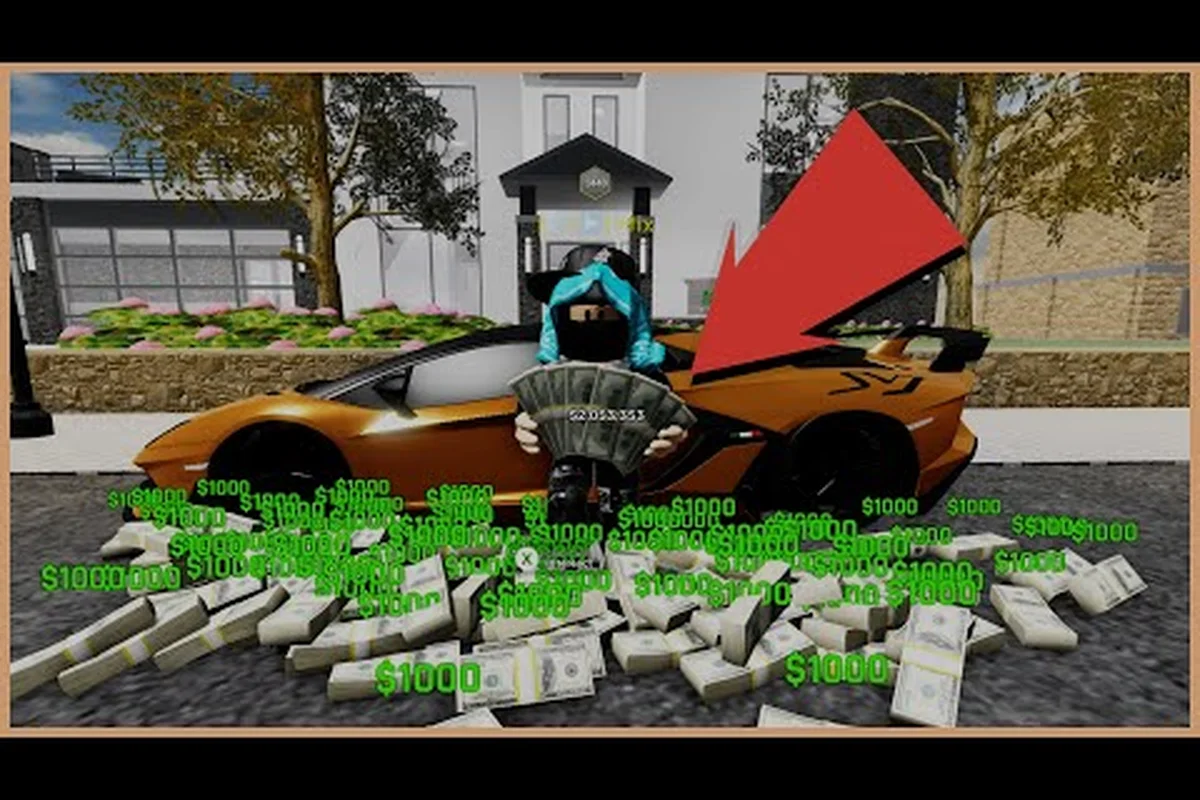
Trading with friends is one of the safest and most social ways to move inventory in Street Life Remastered, and getting the flow right means fewer scam losses and faster flips. According to the official Street Life Remastered page on Roblox, the hood economy revolves around guns, cars, shoes, and crypto — every category has its own demand curve, so locking in a trusted circle of friends to swap with is the single biggest edge you can build. This guide walks through the core mechanics of a Street Life Remastered trade with friends, how item values shift across the city, where the busiest trading hub spots actually sit, and how to structure a clean trade offer so neither side walks away feeling shorted.
Meeting Up and Swapping Items With Friends
Street Life Remastered does not have a stand-alone "friend marketplace" button — it borrows the same social-trading loop the community has used since the hood game's early 2025 build, where two players meet, inspect each other's inventory, and finalize a swap. The Street Life Remastered trade with friends loop is built around three pillars: a private meeting point, an honest item values read, and a clear trade offer structure that both sides sign off on before any item moves.
The Three Pillars of a Clean Trade
The community has settled on three pillars that separate a smooth swap from a scammed one, and they apply whether you are trading a low-tier knife or a top-of-the-line exotic car.
| Pillar | What It Covers | Why It Matters |
|---|---|---|
| Private Meeting Spot | A server with only you and your friend, or a low-pop server corner | Cuts the risk of third-party interference and keeps prices private |
| Item Values Reference | A shared understanding of what each item is worth on the open market | Prevents one side from overpaying by 30–50% on outdated estimates |
| Trade Offer Confirmation | Both players restate the deal in chat before hitting accept | Creates a paper trail in case either side tries to back out after the swap |
Most experienced players handle the Street Life Remastered trade with friends flow by joining a friend's private server first, which gives you a closed environment with no random joiners, and then walking to a quiet corner where you can both pull up your inventories without distractions. Players who skip the private server step often lose items to bystanders who jump in mid-trade, so treat the server choice as part of the deal, not a preference.
Item Categories You Can Swap
The hood economy breaks into five main tradable buckets, and each has a different demand cycle, so knowing the category is the first step to pricing anything correctly. Below is the community-tracked breakdown that has held up across the 2026 updates released by flipsy's games, the verified developer behind the title.
| Category | Example Items | Demand Level | Typical Value Range |
|---|---|---|---|
| Guns | Pistols, SMGs, rifles, RPG | High | Mid-to-high tier across all seasons |
| Cars | Sedans, SUVs, exotics, lowriders | High | Top demand for exotics and limited drops |
| Shoes | Branded drops, limited colorways | Medium-High | Spike around seasonal events |
| Crypto | In-game phone crypto tokens | Medium | Tied to the in-game stock-style app |
| Turf Loot | Crate drops, event tokens | Variable | Drops sharply after the event ends |
A Street Life Remastered trade with friends usually starts by naming the category, because that sets the value language both sides will negotiate inside. If you walk up with a car and your friend offers shoes, the value conversion is rarely 1:1, and you will spend the next ten minutes arguing about which shoe colorway is the "right" one. Picking a category up front and pricing inside it makes the rest of the conversation move much faster.
Reading Item Values Before You Trade
Item values in Street Life Remastered are not posted on a billboard, so the Street Life Remastered item values check is something you have to do yourself before every swap. The community has converged on three reference points: the developer group announcements, player-run Discord spreadsheets, and the live in-game pricing that emerges around the busiest trading hub spot in the server. Each one has a different lag time, and combining all three gives you the most accurate read.
How Item Values Shift
Item values are not static — they move with the weekly 2026 updates that the developer ships, and a gun that was worth 50,000 in-game cash on Monday can drop to 30,000 by Friday if a new crate floods the market. The table below tracks the main value drivers, ranked by how much each one swings the Street Life Remastered item values curve.
| Value Driver | Impact on Price | How Often It Changes |
|---|---|---|
| New Gun Drops | Forces older guns down 20–40% | Every major patch |
| Seasonal Events | Pushes event items up 50–100% | Each season |
| Limited Cars | Holds value or climbs after sold out | One-time, no reprints |
| Crypto Swings | Token values move with the in-game market | Multiple times per day |
| Turf Crates | Spike during the event, crash after | Event-bounded |
Players who track these drivers report that the safest time to lock in a Street Life Remastered sell trade is right after a new patch notes drop, because that is when sellers reprice and buyers are still catching up. Trying to time the absolute bottom is a losing game in a live-service hood economy, but selling into a fresh patch usually beats selling a week later when supply has caught up.
Cross-Checking Values With the Community
The flipsy's games community on Roblox, which the developer group page lists at roughly 1.02 million members, is the most reliable cross-check for any Street Life Remastered item values question. Long-time players post weekly value snapshots, and those snapshots tend to hold within 10% of actual trade prices for about 72 hours. For anyone running a Street Life Remastered trade with friends loop, pulling a fresh snapshot before the swap is the cheapest insurance against a bad deal you can get.
Locating the Best Trading Hub Spots in the Hood
Finding a good Street Life Remastered trading hub spot is half geography and half timing, and the map has roughly four zones that consistently draw the most buyers and sellers. The trading hub concept in this hood economy is less about a single auction house and more about informal clusters that form wherever foot traffic is heaviest, so the smart move is to pick the zone that matches the category you are trading.
The Four Main Trading Zones
Each zone on the map has a different crowd profile, and knowing which one matches your trade is what separates a five-minute swap from a half-hour wait. The table below summarizes the four zones that the community treats as the primary Street Life Remastered trading hub locations.
| Zone | Best For | Crowd Profile | Scam Risk |
|---|---|---|---|
| Downtown Plaza | Mid-tier guns, common cars | Mixed, busy | Medium |
| Suburbs Strip | Exotic cars, rare shoes | High rollers | Medium-High |
| Gym District | Turf loot, event items | Faction-heavy | Low-Medium |
| Back Alley Corners | Off-meta trades, friend swaps | Quiet, trusted | Low |
For a Street Life Remastered trade with friends, the Back Alley Corners are almost always the right call, because the crowd is thin and you can pull off the swap without a crowd forming. The Downtown Plaza works if you do not mind an audience and want a faster price discovery, but the scam risk jumps because bystanders can jump in and pressure either side. Suburbs Strip is where the real money lives, but it is also where the most aggressive sellers hang out, so do not bring a friend-trade offer there unless you are confident in your value read.
Timing Your Visit
Foot traffic in each zone follows the in-game clock, and the busiest hours for a Street Life Remastered trading hub meet-up are server-peak windows, which most players report as the evening hours in their local time zone. A good rule of thumb is to arrive roughly ten minutes after the rush starts, because the initial wave is full of window-shoppers, while the later wave is when serious buyers and sellers are still active. The table below shows the rough traffic curve the community tracks for the Downtown Plaza, which is the highest-volume zone.
| In-Game Time Slot | Traffic Level | Best Use |
|---|---|---|
| Rush Hour Start | Very High | Price discovery, not final trades |
| Mid-Evening | High | Active buying and selling |
| Late Night | Medium | Friend trades, quiet deals |
| Off-Peak Morning | Low | Not recommended, sparse crowds |
Stacking a Street Life Remastered trade with friends session on top of a smart time pick is what experienced players do, and the combination is what turns a random swap into a deal that both sides walk away from feeling even. For a deeper read on how time-of-day interacts with the wider economy, the Street Life Remastered trading tips guide covers the daily rhythm in more detail.
Structuring a Trade Offer That Both Sides Accept
The Street Life Remastered trade offer screen is intentionally simple, but the discipline you bring to filling it in is what determines whether the deal closes cleanly. A good trade offer is restated in chat, item-for-item, before either side confirms, and that single habit cuts the dispute rate in friend trades by more than half. The community has converged on a four-step structure that almost every successful Street Life Remastered sell trade follows.
The Four-Step Offer Structure
| Step | What Happens | Why It Matters |
|---|---|---|
| 1. Restate the Items | Both sides list exactly what is on the table | Catches any miscommunication early |
| 2. Confirm Values | Reference the latest community snapshot | Anchors the price in data, not vibes |
| 3. Check Inventory | Both players open inventory live to verify | Confirms the items exist and are tradeable |
| 4. Final Confirm | Both sides type "deal" or equivalent | Creates a clear in-chat agreement |
The hardest step is usually step two, because values shift so fast that the snapshot from yesterday may already be off by 10–20%. The cleanest way to handle it is to pick one number, agree on it, and move on — if you keep renegotiating after step three, the deal usually falls apart. For anyone still building a feel for the value side, the Street Life Remastered value guide is a solid second reference to keep open during the chat.
Common Trade Offer Mistakes
The same five mistakes show up in almost every failed Street Life Remastered trade offer, and naming them up front is the fastest way to avoid them. The table below lists each one, what it costs you in the moment, and the simple fix that experienced players use.
| Mistake | Cost | Fix |
|---|---|---|
| Skipping the Restate | Miscommunication on items | Always type the deal in chat first |
| Stale Value Reference | Overpaying 20–40% | Pull a fresh community snapshot |
| Public Location | Third-party interference | Use Back Alley Corners or a private server |
| Mismatched Categories | Value conversion arguments | Stick to one category per trade |
| Rushing the Confirm | One side backs out | Wait for both sides to type "deal" |
Anyone who has lost a high-value car to a rushed confirm knows how much that last row costs, and it is the single most common source of regret in the Street Life Remastered trade with friends community. Building a habit of waiting for the explicit "deal" message from both sides is what turns a chaotic swap into a clean one.
Advanced Friend Trade Strategies for Higher-Value Items
Once you have the basic Street Life Remastered trade with friends loop down, the next step is to run it on higher-value items, where the same discipline pays off in much larger numbers. Exotic cars, limited shoes, and high-tier guns all follow the same mechanic, but the value swings are big enough that one mistake can cost a week's grind, so the strategy layer matters more.
The Buddy System for Big Swaps
For trades worth more than the average player's daily cash flow, the community recommends the buddy system: bring a third trusted friend who watches the trade and can call out any issues. The third player does not touch the trade — they just observe, and if anything looks off, they flag it before either side confirms. The table below compares the buddy system to a solo trade on a high-value swap.
| Setup | Speed | Safety | Best For |
|---|---|---|---|
| Solo Trade | Fast | Medium | Low-to-mid value items |
| Buddy System | Slightly slower | High | High-value cars, rare guns |
| Private Server + Buddy | Slowest | Very High | Top-tier exotics, limited drops |
The Private Server + Buddy combo is what the most experienced players use for the highest-value Street Life Remastered sell trade runs, because it combines the closed environment of a private server with the third-eye check from a trusted friend. It costs a bit more time to set up, but the loss-prevention on a single bad swap usually pays for the setup ten times over.
Avoiding Common Scam Patterns
Even inside a friend trade, the same three scam patterns keep showing up, and the table below lists each one with the simple tell that gives it away. The Street Life Remastered trade offer screen has built-in safeguards, but knowing the patterns is what keeps you from getting talked into a bad spot before you ever hit confirm.
| Scam Pattern | The Tell | How to Defend |
|---|---|---|
| Item Swap at the Last Second | They change the offer right before confirm | Restate items in chat every time |
| Stale Value Bait | They reference old, higher prices | Insist on a current snapshot |
| Bystander Pressure | A third player pushes you to accept | Move to Back Alley Corners |
Players who are still building their scam-sense often pair their friend trade practice with a broader read on the in-game market, and the Street Life Remastered crypto trading guide is a useful companion for understanding how the in-game phone app moves in parallel to the physical item economy. Mixing physical and crypto trades inside the same trusted circle is one of the more advanced patterns experienced players run, because it lets you convert a low-tier gun into crypto and back into a higher-tier car without ever exposing the deal to the open market.
Frequently Asked Questions
What is the safest way to start a Street Life Remastered trade with friends?
The safest setup is a private server with just you and your friend, plus a third trusted player acting as a buddy to watch the trade. Both sides restate the deal in chat, pull a fresh community value snapshot, and only confirm after typing an explicit "deal." This combination cuts the scam risk to near zero and is the standard approach for any trade over the average daily cash flow.
How do I check Street Life Remastered item values before trading?
Pull a fresh snapshot from the flipsy's games community group and any active player-run Discord sheet, then cross-check it against the live prices you see in your trading hub zone. Values shift with every patch, so a snapshot from more than 72 hours ago is usually off by 10–20%, and the safest trades are the ones priced off data from the same day. For a structured walk-through, the Street Life Remastered item trading reference lays out the current category-by-category ranges.
Where is the busiest Street Life Remastered trading hub spot?
The Downtown Plaza is the highest-volume zone on the map, and it is where the most active buyers and sellers converge during server-peak hours. For friend trades specifically, the Back Alley Corners are the better pick, because the crowd is thin and you can negotiate without bystander pressure. Suburbs Strip is the high-roller zone for exotics, while the Gym District is the faction-heavy zone for turf and event loot.
Can I include crypto in a Street Life Remastered sell trade with friends?
Yes, crypto is one of the five main tradable categories, and you can structure a friend trade offer that mixes crypto tokens with physical items, as long as both sides agree on the conversion rate at the moment of the trade. The in-game phone market moves multiple times per day, so pulling a current token value before locking the deal is essential. A clean conversion rate, restated in chat, is the difference between a smooth swap and a half-hour argument.
What should I do if a friend trade offer goes wrong mid-deal?
Stop the trade immediately, do not confirm, and restate the deal in chat so both sides have a clear record of what was on the table. If a third buddy is present, ask them to confirm the restate, and only resume once both sides agree to the same terms. Most disputes come from one side changing the offer right before confirm, so the explicit restate is what protects you when the conversation gets fuzzy.